
Business
Business
Business
Business
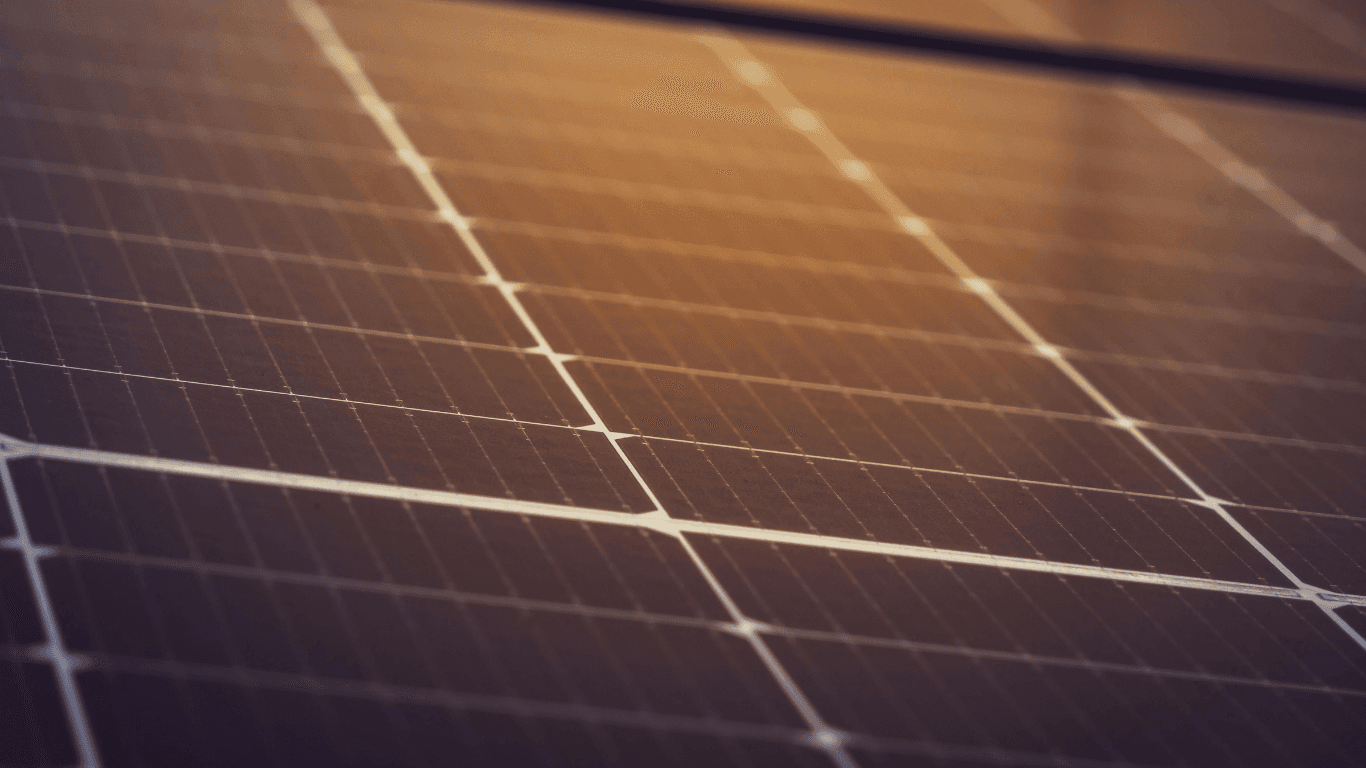
Singapore has spent the better part of the last decade aggressively building out its solar capacity. Panels on HDB rooftops. Floating arrays on reservoirs, industrial buildings, schools and carparks, if there's a surface with sunlight on it, someone has probably already pitched a solar installation on it. The results have been impressive: Singapore surpassed its original 2 GWp solar target in 2025, ahead of schedule, and has since raised the bar to 3 GWp by 2030.
But here's the part that almost nobody is talking about: those panels don't last forever. And the first generation of Singapore's large-scale solar installations is already ageing.
What happens to them when they come down?
Singapore's solar ambition is well documented. Its solar waste strategy is still being written.
In the solar industry, "repowering" refers to the process of upgrading or replacing components of an existing installation. This typically happens when ageing inverters fail, panels degrade, or newer, more efficient modules make the economics of a swap compelling.
Inverters are usually the first thing to go. They have a typical useful life of 10 to 15 years. Singapore's earliest commercial solar deployments date to around 2008 to 2012. Do the maths: a meaningful portion of those assets are at or past the point where inverter replacement becomes unavoidable. And in many cases, when developers are already on-site swapping inverters, it makes financial sense to go further and replace the panels too, since modern modules can deliver more than 600W per unit compared to the 200W panels that were standard a decade ago.
For building owners and facilities managers, a repowered rooftop means better output from the same footprint. For solar developers managing portfolios of rooftop PPA assets, it means renewed contract value and improved returns. The economics are straightforward.
What is less straightforward is what happens to the panels coming off.
| Quick Fact:IRENA (International Renewable Energy Agency) projects up to 60 to 78 million metric tonnes of global solar panel waste by 2050. |
|---|
Solar panels are not simple bits of hardware. A standard crystalline silicon PV module contains glass, aluminium framing, copper wiring, silver (used in conductive paste), silicon cells, and polymer encapsulants.
Toss a solar panel into a general waste bin and you are not just losing the recoverable value of those materials. You are creating a regulatory and environmental liability. In Singapore, improper disposal of hazardous waste is governed under the Resource Sustainability Act, and the NEA takes it seriously.
Yet until recently, there was no dedicated, licensed, automated pathway in Singapore to recycle end-of-life solar panels responsibly. The infrastructure simply did not exist to match the ambition of the Green Plan.
The challenge with recycling solar panels is that the same engineering that makes them durable. The tight lamination, weatherproof sealing, layered composite materials, also makes them difficult to disassemble. The glass, silicon, and metal layers are fused together under heat and pressure to withstand decades of outdoor exposure.
Separating those layers cleanly enough to recover materials of commercial value requires purpose-built equipment. Manual disassembly is slow, inconsistent, and exposes workers to potential hazards. Without automation, the economics of solar panel recycling simply do not stack up, which is why most panels, globally, still end up in landfill.
KGS Green Solutions operates Singapore's first automated solar panel recycling facility, the first licensed, purpose-built facility in the country specifically designed to process end-of-life PV modules at commercial scale.
As a NEA-licensed recycler, KGS provides a fully compliant, end-to-end service covering collection, transport, processing, and documentation. Clients receive formal recycling acknowledgements that can be used directly in sustainability reporting, ESG disclosures, and regulatory compliance submissions.
The recycling process at KGS systematically recovers the key materials locked inside every solar panel:
Glass — which makes up approximately 75% of a panel's weight, recovered and channelled back into industrial glass manufacturing.
Aluminium — from the frame, fully recoverable and highly valuable as a secondary material.
Silicon — the photovoltaic core of every panel, recoverable for reuse in lower-grade applications.
Silver — present in small quantities and has significant commodity value.
Copper — from wiring and busbars, fully recyclable.
The result is that a decommissioned solar panel, which might otherwise have been treated as waste, becomes a source of recovered material, extending the value of the original materials and reducing the environmental footprint of Singapore's solar transition.
Companies managing portfolios of rooftop solar assets under Power Purchase Agreements (PPAs) are the most immediate source of end-of-life panel volumes. When repowering, developers need a licensed recycling partner who can handle bulk disposal, provide compliant documentation, and do so without disrupting ongoing site operations. KGS has built its commercial process specifically around these requirements.
Industrial and commercial REITs increasingly face ESG reporting obligations that require them to account for how sustainability assets are managed across their full lifecycle, not just during operation. A solar installation that ends up in landfill is an ESG liability. One that is recycled by a licensed facility, with documentation, is a positive disclosure. The distinction matters more every reporting cycle.
Singapore's SolarNova program has deployed panels across thousands of HDB blocks and public buildings. As the first SolarNova cohorts age, a commercial grade recycling solution will be essential. KGS is positioned to be that solution, already NEA-licensed, already operating, and already familiar with the requirements of public sector procurement.
The contractors doing the physical work of repowering, removing old panels, installing new ones, need a straightforward, reliable disposal pathway for the hardware they take down. Partnering with KGS means they can offer their clients a fully compliant recycling solution as part of the repowering package, rather than leaving disposal as an unresolved liability.
Singapore's residential solar sector has grown significantly, particularly as panel payback periods have dropped to as short as five years. Many early residential adopters are now a decade or more into their installations. When those systems need upgrading or replacement, homeowners need a safe, legitimate way to dispose of the old panels, not just a general waste collection.
Singapore's Green Plan 2030 is not just about deploying more renewable energy. It is equally about building the circular infrastructure to support that deployment sustainably, reducing waste to landfill, recovering material value, and closing loops in the resource chain.
Solar panel recycling sits squarely within that agenda. Every tonne of glass, aluminium, and silicon recovered from an end-of-life panel is a tonne that does not need to be newly mined or manufactured. Every properly recycled panel is one that does not leach hazardous materials into Singapore's waste stream.
For organisations with sustainability commitments, whether driven by regulatory obligation, investor expectation, or genuine environmental values, the question of what happens to solar panels at end-of-life is no longer a secondary concern. It is part of the story of whether a solar investment was truly sustainable from start to finish.
| The Full Lifecycle of a Solar InvestmentA solar panel that is installed, operated, repowered where viable, and then responsibly recycled represents genuine circularity. The alternative — landfill disposal — negates a portion of the environmental benefit the panel generated during its operational life. |
|---|
Yes. Solar PV panels are classified under Singapore's e-waste regulatory framework, which means they are subject to NEA licensing requirements for recycling. This is why it matters who you engage for solar panel disposal, not every waste collector is licensed to handle them.
Absolutely, and this is exactly what KGS does. Through automated processing, the key material components of a solar panel, glass, silicon, silver, aluminium, and copper, can be separated and recovered for reuse.
KGS issues formal recycling acknowledgements following each collection and processing cycle. These documents confirm that your panels have been handled by a licensed facility in compliance with Singapore regulations. They can be used in sustainability reports, ESG disclosures, tender submissions, and regulatory filings.
Yes. KGS is equipped to manage solar panel recycling at scale, from individual rooftop systems to large commercial arrays and solar farm decommissioning projects. Our team coordinates collection logistics, transport, and processing to suit each client's operational requirements.
Contact KGS directly through our website at www.kgs.com.sg or via our Solar Panel Recycling service page. Our team will assess your requirements, confirm logistics, and provide a proposal. The process is designed to be straightforward, we handle the complexity so you don't have to.
Singapore's solar ambition is real and it is accelerating. The target of 3 GWp by 2030 is made possible by a national commitment backed by regulatory frameworks, government programmes, and significant private investment.
But ambition without infrastructure is incomplete. Every panel that goes up will eventually need to come down. And when it does, Singapore needs a licensed, capable, purpose-built recycling solution ready to receive it.
KGS exists precisely to fill that gap. As Singapore's first automated solar panel recycling facility, we are not waiting for the problem to arrive. We are already operational, already licensed, and already partnering with developers, building owners, and statutory boards to ensure that the growth of Singapore's solar sector is matched by the growth of its recycling capability.
If you are a solar developer planning a repowering project, a building owner with ageing panels, or an organisation looking to close the loop on your solar investment — we would like to talk.
Sign up for exclusive offers, events and more.