
Business
Business
Business
Business
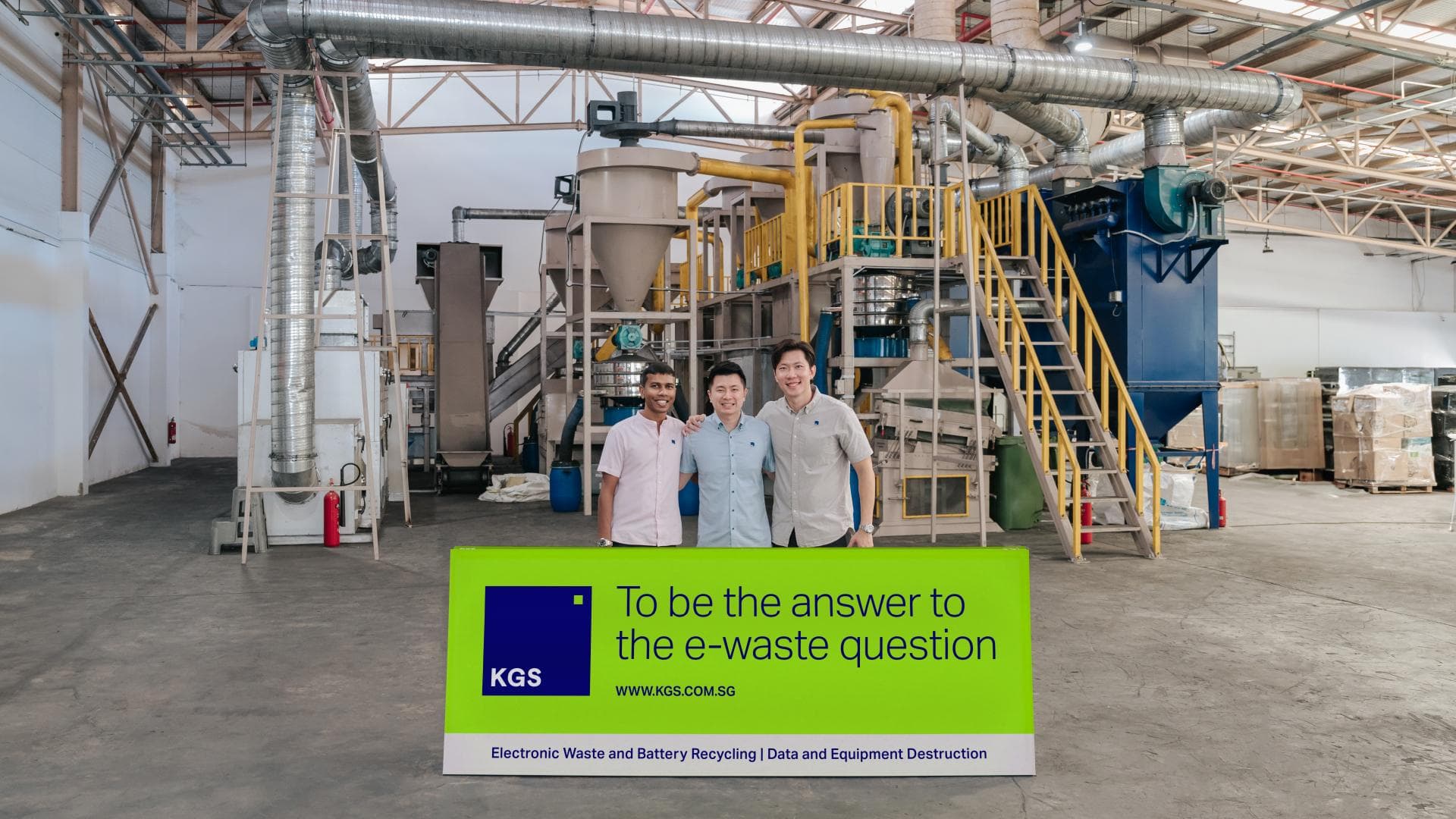
Most people throw e-waste away. We built a company by fixing that problem. Vulcan Post took notice.
KGS was recently featured in a Vulcan Post story on how we grew from simple door-to-door collections into one of Singapore's leading integrated e-waste recyclers. It is a story worth telling properly.
It started with $10,000 in savings, a 600 sq ft unit in Ang Mo Kio, and a simple observation: electronics were piling up everywhere, and almost nobody was dealing with them responsibly. Most devices ended up in the general bin. The rare few that made it to a recycling point were often handled without any data destruction, leaving years of personal or corporate information exposed.
The founders of KGS saw that gap and decided to fill it. What began as a door-to-door collection service with one van grew steadily, one client at a time, built on a reputation for reliability, data security, and doing things properly.
$10,000 in savings. A 600 sq ft unit in Ang Mo Kio. And a problem nobody else was solving seriously.
As the business grew, so did the demands of clients. Data security became an increasingly critical concern, particularly for businesses handling sensitive corporate information. KGS invested in a degaussing machine, a device that uses a strong magnetic field to completely and permanently erase data from hard drives and storage media. It was an early signal of the direction the company was heading: not just recycling, but recycling done right.
In 2019, KGS crossed paths with Andrew Tay, who was then working in the paper recycling sector. Recognising the long-term potential of e-waste recycling over paper, Andrew joined KGS in 2021 as co-founder. With an engineering background, he strengthened KGS's backend operations and opened up new recycling capabilities. Today, Andrew serves as Director of KGS, helping to drive the company's expansion and technical direction.
By 2023, the surge in battery-powered devices and electric vehicles created a clear opportunity. KGS invested $2 million to build a 20,000 sq ft vertical battery recycling facility in Tuas, making it Singapore's third dedicated battery recycling plant at the time. The facility added 2,600 tonnes of annual battery recycling capacity, boosting Singapore's total capacity by around 30%.
The process is methodical. Batteries are first discharged in saltwater to safely remove any remaining power. They are then dismantled manually, given the diverse specifications across battery types, before being fed into shredding machines for further processing. It is careful, specialised work that most recyclers are not equipped to handle.
KGS invested $2 million to build Singapore's third dedicated battery recycling plant, adding 2,600 tonnes of annual capacity.
This year, KGS expanded its facility to 32,000 sq ft and launched Singapore's first automated solar panel recycling facility, consolidating all operations under one roof in Tuas. Today, KGS offers three integrated recycling capabilities that no other facility in Singapore combines:
General e-waste recycling for electronics, IT equipment, and peripherals
Lithium-ion and lead-acid battery recycling
Solar panel recycling, the first automated facility of its kind in Singapore
Beyond processing capacity, the facility is built for efficiency. Vertically optimised layouts make the most of available space, and integrated solar panels on the roof contribute to the facility's own energy needs — a small but fitting touch for a company built around sustainability.
Building a business over nine years is not without its setbacks. In October 2024, a fire broke out at the KGS warehouse while operations were closed. SCDF suspected the cause to have originated from stored e-waste, though the exact cause remains unknown. It was the first fire in KGS's nine-year history.
The team addressed it directly and transparently, reaffirming their commitment to rigorous safety standards. Incidents like this are a reminder of the real risks involved in e-waste handling, particularly with lithium-ion batteries, and why professional, regulated recycling facilities exist. Devices that are improperly stored or disposed of in general waste pose the same risks without any of the safety protocols.
The Vulcan Post feature also highlights what drives KGS beyond the commercial side of the business: making e-waste recycling accessible to every Singapore resident, not just businesses.
That is where TakeBag comes in. Residents order a free polymailer bag, fill it at home with old electronics, and drop it off at any of approximately 1,100 PICK! locker locations across Singapore, most within 5 minutes of any HDB home. Every item collected goes through certified data destruction and responsible recycling at the Tuas facility.
TakeBag is listed on the NEA's official e-waste recycling page and has been recognised by the National Environment Agency as a programme for Singapore residents. It has been featured on Channel 8 and in Lianhe Zaobao, and distributed door-to-door across estates including Zhenghua and Clementi in partnership with local grassroots organisations.
From a 600 sq ft unit in Ang Mo Kio to a 32,000 sq ft integrated facility in Tuas. The mission has always been the same: make e-waste recycling simple, secure, and accessible for everyone.
Being featured in Vulcan Post is a milestone we are proud of, but the real story is the one built with every partner, client, community volunteer, and resident who has chosen to recycle responsibly.
Singapore's household recycling rate has faced headwinds in recent years. Changing that requires more than infrastructure. It requires making recycling genuinely easy, genuinely trustworthy, and genuinely worth doing. That is what KGS is here for.
If you are a resident, order your free TakeBag at takebag.kgs.com.sg. If you are a business looking for certified e-waste disposal, reach out to us at ask@kgs.com.sg.
Sign up for exclusive offers, events and more.