
Business
Business
Business
Business
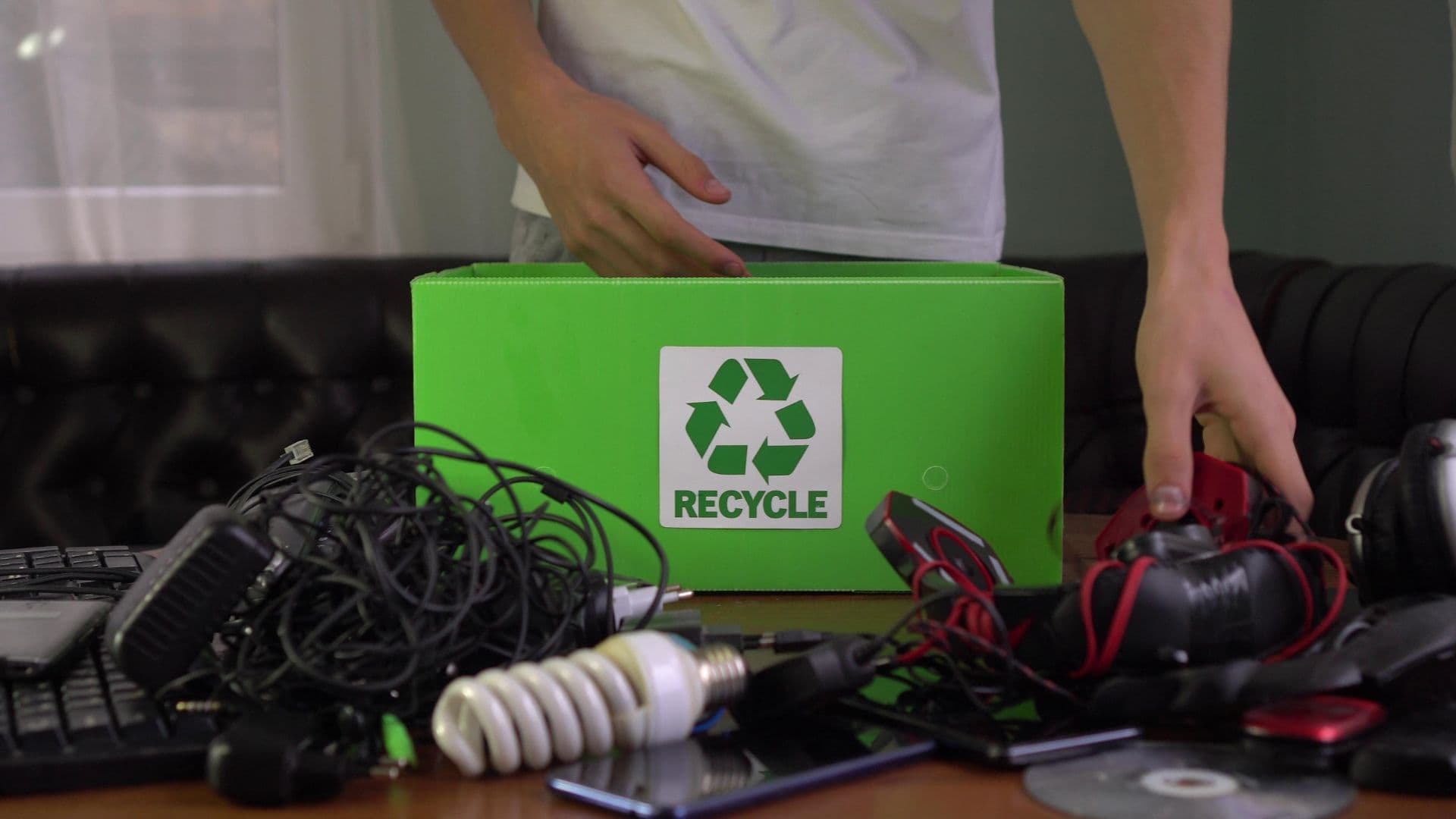
IT asset disposition (ITAD) is the process of securely retiring your organisation's end-of-life IT equipment, such as laptops, desktops, servers, storage drives and network gear, so that the data on it is destroyed, the hardware is recycled or disposed of responsibly, and every step is documented for compliance. In short, ITAD is much more than throwing out old computers: it is data security, regulatory compliance and e-waste recycling handled as one controlled, auditable process.
Jump to: the ITAD process, data destruction, what KGS handles, or the FAQs. Ready to retire assets now? See the KGS ITAD service.
IT asset disposition, or ITAD, covers everything that happens to a piece of IT equipment after your business stops using it. A reputable ITAD provider collects the assets under a documented chain of custody, permanently destroys any data they hold, then either recycles the materials or disposes of them in a licensed, environmentally responsible way, and gives you the paperwork to prove it.
It helps to separate two ideas that are often confused. E-waste recycling deals with the physical material: recovering metals and plastics from old electronics. ITAD is the wider, security-led process that wraps recycling inside data destruction, chain of custody and compliance reporting. Every ITAD job includes recycling, but not every recycling job is ITAD.
A complete ITAD engagement moves your retired assets through a set of controlled stages. Here is what each one involves and why it matters.
| Stage | What happens | Why it matters |
|---|---|---|
| Inventory and collection | Assets are logged by type and serial number, then collected from your site | You get an auditable record of exactly what left the building |
| Secure transport | Equipment is moved under a documented chain of custody | Removes the gap where devices, and data, can go missing |
| Data destruction | Drives are erased, degaussed, crushed or shredded to standard | Protects against data breaches and meets PDPA obligations |
| Certificate of Destruction | You receive documentation confirming the data was destroyed | Your proof of compliance for auditors and regulators |
| Recycling and disposal | Remaining materials are recycled through a licensed facility | Keeps e-waste out of landfill and supports sustainability goals |
| Reporting | A record of assets, methods and outcomes is handed back to you | Closes the loop and evidences responsible disposal |
For a Singapore business, disposing of IT assets carelessly is a real risk, not a housekeeping detail. Old drives routinely hold personal data, customer records and confidential company information, and simply deleting files or formatting a disk does not remove it. If that data resurfaces, the fallout is both regulatory and reputational.
Under the Personal Data Protection Act (PDPA), organisations must protect personal data throughout its life, including when the hardware that holds it is retired. A structured ITAD process with certified data destruction is how you meet that obligation. For the detail, see our complete guide to PDPA-compliant IT asset disposal.
There is an environmental dimension too. E-waste in Singapore is regulated under the National Environment Agency (NEA) framework, and IT equipment should be recycled through a licensed collector rather than sent to general waste. Choosing a NEA-licensed provider keeps your disposal both secure and compliant. Our corporate handbook for IT asset and e-waste recycling walks through that side in more depth.
A typical ITAD engagement with a provider like KGS runs like this:
Data destruction is what separates real ITAD from ordinary recycling. The right method depends on the device, the sensitivity of the data and whether the drive will be reused or retired for good. Common approaches include:
Whichever method is used, the outcome should be provable. KGS provides certified data destruction services and issues a Certificate of Destruction so you can evidence, not just assume, that your data is unrecoverable.
KGS runs a secure, compliant ITAD service in Singapore built for enterprises and large organisations. It covers the full chain of custody with certified data destruction and recycling, so retired equipment is handled from collection to final disposal without gaps.
For large fleets or a full site, KGS also handles data centre decommissioning. Explore the KGS ITAD service to see how it works, or get in touch to arrange a collection.
Not every disposal vendor offers true ITAD. Before you hand over assets that hold company or customer data, check that a provider can show you:
If a provider cannot evidence these, you are carrying the compliance risk, not them. KGS meets all of the above, which is why enterprises across Singapore trust it to retire IT assets securely.
IT asset disposition is how a responsible organisation retires its IT equipment in 2026: data destroyed, assets recycled through a licensed facility, and the whole process documented for compliance. Done well, ITAD protects you from data breaches, keeps you compliant with PDPA and NEA requirements, and keeps e-waste out of landfill, all at once.
Ready to retire IT assets the secure way? Explore the KGS ITAD service, or contact KGS to arrange a collection and get your Certificate of Destruction.
IT asset disposition (ITAD) is the process of securely retiring end-of-life IT equipment such as laptops, servers, storage drives and network gear. A provider collects the assets under a documented chain of custody, destroys the data on them, recycles or disposes of the hardware responsibly, and gives you documentation to prove it. It combines data security, compliance and e-waste recycling in one controlled process.
E-waste recycling deals with the physical material: recovering metals and plastics from old electronics. ITAD is the wider, security-led process that wraps recycling inside data destruction, chain of custody and compliance reporting. Every ITAD job includes recycling, but not every recycling job is ITAD.
The Personal Data Protection Act (PDPA) requires organisations to protect personal data throughout its life, including when the hardware holding it is retired. Deleting files or formatting a disk does not remove the data. A structured ITAD process with certified data destruction is how you meet that obligation and evidence it to auditors.
Depending on the device and data sensitivity, drives are erased with certified software, degaussed with a magnetic field, crushed, or shredded into fragments. KGS provides certified data destruction and issues a Certificate of Destruction so you can prove the data is unrecoverable.
Yes. KGS provides a Certificate of Destruction confirming that the data on your retired assets was destroyed, along with reporting on what was collected and how it was handled. This is your proof of compliance for auditors and regulators.
KGS handles laptops, desktops, servers, storage and network devices end to end, under a full chain of custody. It is licensed by NEA, aligned with PDPA requirements, and recycles the remaining materials responsibly. For large fleets or a full site, KGS also handles data centre decommissioning.
Start with the KGS ITAD service page to see what is covered, then contact KGS to arrange a collection. KGS will handle inventory, secure collection, certified data destruction, recycling and the documentation you need for compliance.
Sign up for exclusive offers, events and more.